

10 Mistakes To Avoid When Choosing Exterior Home Paint Colors

Choosing a new exterior color can feel exciting until you start comparing swatches in full sun, shade, and next to brick, stone, or roofing. The right color helps your home look clean, current, and well cared for. The wrong one can clash with fixed materials, fade faster, or look far brighter outside than it did in the store.
Here are 10 mistakes to avoid when choosing exterior home paint colors before you commit to gallons of paint and a full project.
1. Picking a Color From a Tiny Swatch
Small paint chips don’t show how a color will look across siding, trim, shutters, doors, and large exterior surfaces. A color that looks soft on paper can look bold once sunlight hits a whole wall.
Test large samples on different sides of the home. Check them in morning light, afternoon sun, and evening shade. South Carolina homes often deal with strong sunlight, humidity, and coastal glare, so color can shift more than you expect.
Paint sample boards if you don’t want to mark the siding yet. Move them near brick, stone, gutters, and landscaping before you choose.
2. Ignoring the Roof, Brick, or Stone
Your exterior paint color has to work with the materials that stay in place. Roof shingles, brick, stone, concrete, and metal accents all have undertones. A cool gray can stand up to warm brick. A creamy white can look yellow next to a blue-gray roof.
Start with the fixed features first. Match the paint family to those tones before you bring in personal preference.
Look for these undertones:
- Warm: tan, cream, brown, rust, orange, gold
- Cool: blue, charcoal, slate, crisp gray, black
- Neutral: soft beige, greige, taupe, muted white
A strong exterior color plan respects what already exists. That keeps the whole home looking intentional.
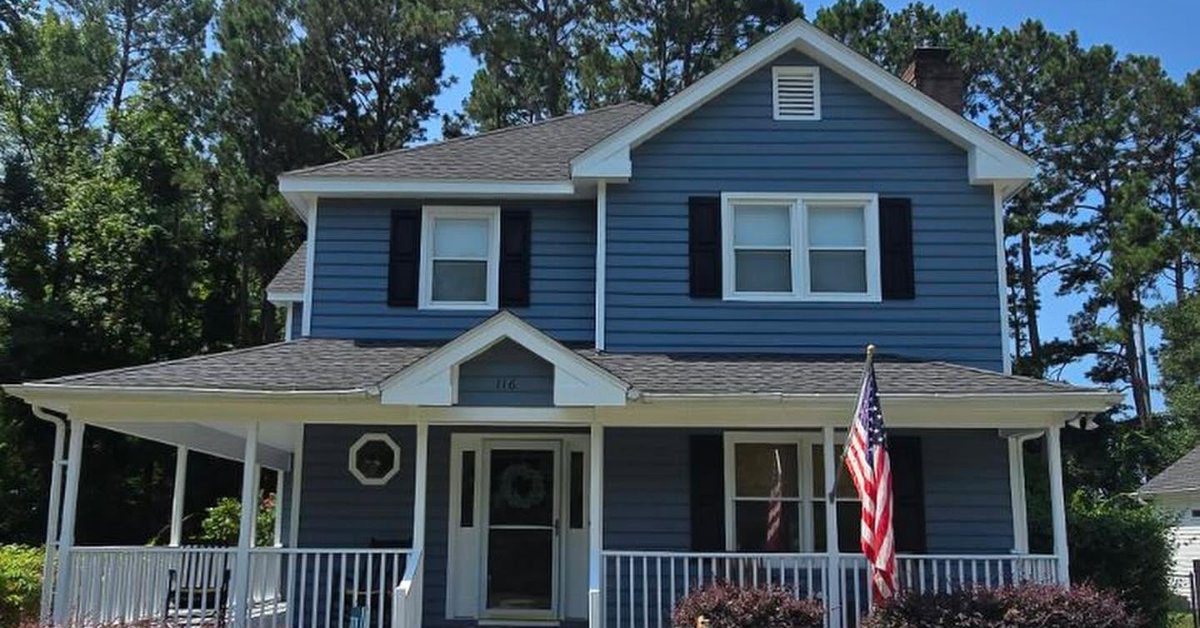
3. Choosing Trendy Colors Without Considering the Home
Trends can inspire but shouldn’t steer your whole project. Some homes shine in black and white; others need softer hues based on architecture, roofline, or neighborhood.
A coastal home may suit light blue, soft green, warm white, or sandy beige, while a brick home might require deeper shutters, warm trim, or muted siding. Modern homes can look striking with bold contrasts if the materials support it.
Consider if the color matches the home’s shape, age, and environment. A color can look great online but feel wrong in your house.
4. Forgetting About Trim, Shutters, and Doors
Many homeowners choose the main siding color first and add trim, shutters, and doors later, which can result in a mismatched look. Your exterior color palette needs a clear plan from the start. Siding has the largest surface area, trim frames the home, shutters add contrast, and the front door gives personality.
Typically, two to four exterior colors work well; too many make the exterior busy, too few hide details.
A balanced palette may include:
- Main siding color
- Trim color
- Shutter or accent color
- Front door color
During exterior home painting, pros assess how each detail works together before paint is applied to the home.
5. Going Too Bright or Too Dark
Exterior colors look stronger outside than they do inside. Bright colors can look loud in full sun. Dark colors can look rich and polished, but they may absorb heat and show dust, fading, or surface flaws faster.
That doesn’t mean you have to avoid bold color. It means you need to place it wisely. A deep navy front door may look great. A full navy exterior may need the right roof, trim, and sunlight exposure to work.
If you love a bold shade, test a muted version from the same color family. Many exterior color wins come from choosing a color with a little gray, brown, or softness mixed in.
6. Overlooking the Neighborhood
Your home doesn’t need to match neighbors but should fit the street. Choose colors that age well, suit the area, and add character, especially among homes with similar styles. Check neighborhood or HOA color rules before painting to avoid future repaints. A personal, cohesive color scheme ensures a polished look that complements the home and setting.

7. Forgetting About Paint Finish
Color matters, but finish changes the final look. Exterior paint finishes can affect sheen, durability, and the amount of surface texture visible.
Flat or matte finishes can hide imperfections, but they may collect dirt more easily. Satin finishes often suit siding because they offer a clean look with better washability. Semi-gloss finishes work well for trim, doors, and accents because they stand up to handling and moisture.
The right finish depends on the surface, the product, and the exposure. Wood, fiber cement, stucco, and metal may each require different prep and coating options.
Don’t pick a color without discussing the finish. The same shade can look different in satin than it does in flat.
8. Skipping Prep Before Color Selection
Paint color won’t fix poor prep. Dirty siding, chalky paint, mildew, peeling areas, and failing caulk can affect how the new color looks and how long it lasts.
Before you settle on a color, inspect the exterior. Some homes need repairs, pressure washing, sanding, priming, or caulking first. A light color may highlight damaged trim. A dark color may draw attention to uneven siding.
Prep also helps you choose the right product. Coastal humidity, sun exposure, and frequent storms can put extra stress on exterior paint. A quality paint job starts before the first coat goes on.
9. Choosing White Without Testing Undertones
White may sound simple, but exterior whites vary a lot. Some look crisp. Some look creamy. Some turn yellow, blue, or gray depending on the light and nearby materials.
Bright white can look harsh in direct sun. Warm white can clash with cool stone or gray roofing. Off-white can look clean and classic when it matches the home’s undertones.
Test white samples next to trim, gutters, brick, and the roof. View them at different times of day. If you plan to use white on siding and trim, choose enough contrast so the architectural details still show.
10. Hiring Without Discussing Color Guidance
A painter should do more than apply paint. The right team can help you understand prep needs, product options, sheen, and how colors may perform outside.
Before you hire, ask how the company handles color questions, sample areas, surface prep, and communication. A professional eye can help you avoid costly second guesses. You’ll still make the final call, but you won’t have to sort through every color decision alone.
Before You Commit
Before approving the final palette, review the entire home. Check siding and roof compatibility, compare trim and shutter colors in natural light, and observe the front door from the street. Don’t rush the sample stage; testing colors for a few extra days saves frustration. Record final color details and locations for easier touch-ups.
Choosing exterior colors takes more than picking a shade you like. It takes a clear look at light, materials, finish, prep, and the style of your home. Keep these 10 mistakes to avoid when choosing exterior home paint colors in mind, and you’ll feel much more confident when it’s time to paint.